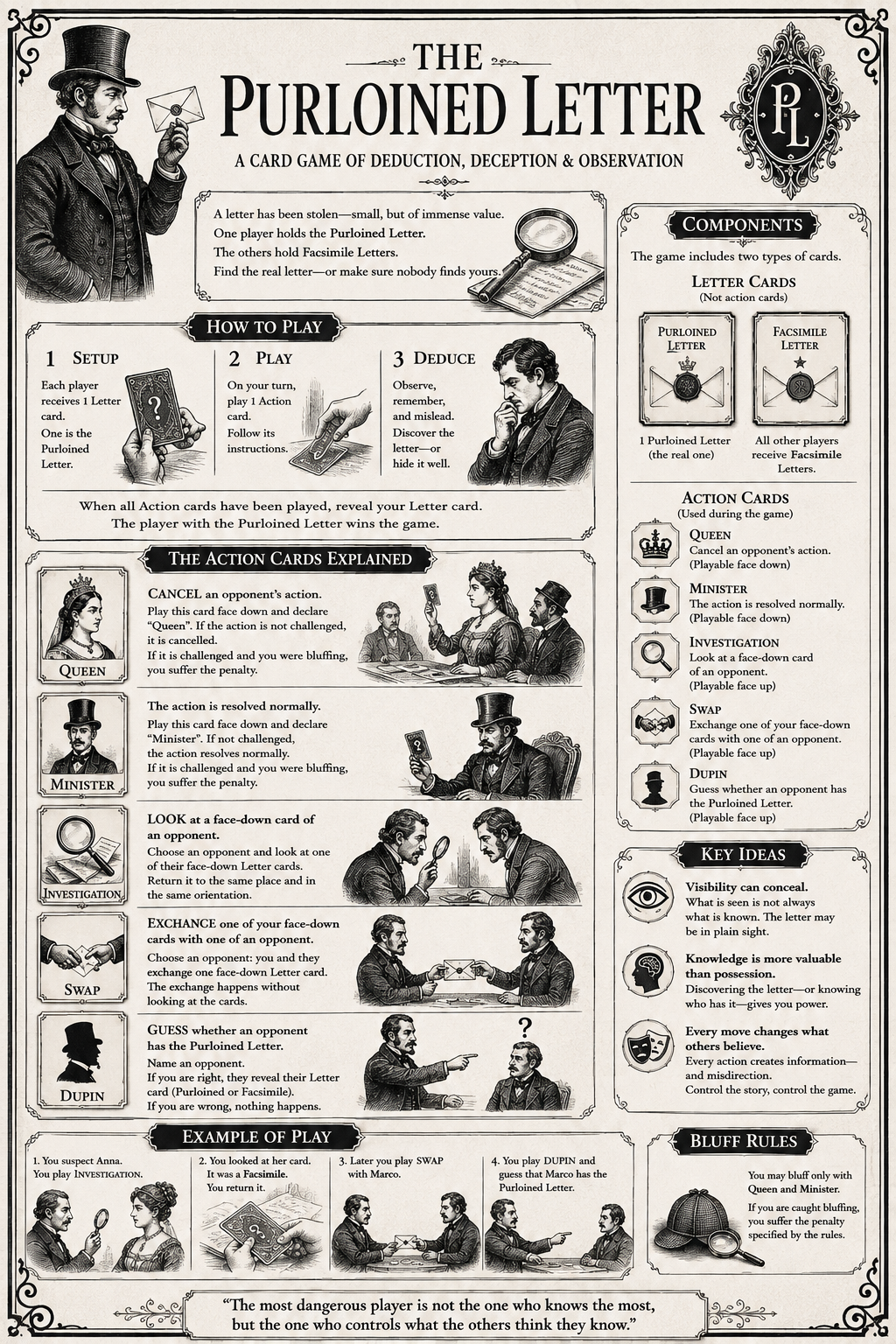

The Purloined Letter is one of Edgar Allan Poe’s most celebrated detective stories and the third tale featuring his brilliant investigator, C. Auguste Dupin. First published in 1844, the story presents a seemingly simple mystery: a compromising letter has been stolen, and although the police know who has it, they cannot discover where it is hidden.

Unlike a conventional mystery centered on murder, violence, or a complex crime scene, Poe builds his story around a fascinating intellectual problem. The stolen letter is not concealed in an elaborate secret compartment. Instead, it is hidden in plain sight, where everyone can see it but no one recognizes it. Dupin solves the mystery by abandoning the assumptions that guide the police and reconstructing the way the thief himself thinks.
This simple premise transforms The Purloined Letter into a sophisticated exploration of reasoning, perception, deception, and power. The story asks an enduring question: How can something remain hidden when it is completely visible?
Poe’s answer is that concealment does not always depend on physical secrecy. Sometimes an object becomes invisible because we are looking for it in the wrong way. In The Purloined Letter, the true detective is therefore not the person who searches most thoroughly, but the one who learns to see differently.
More than a classic detective tale, The Purloined Letter is a story about the power of information and the limits of perception—an enduring literary puzzle in which the simplest hiding place proves to be the most difficult to see.
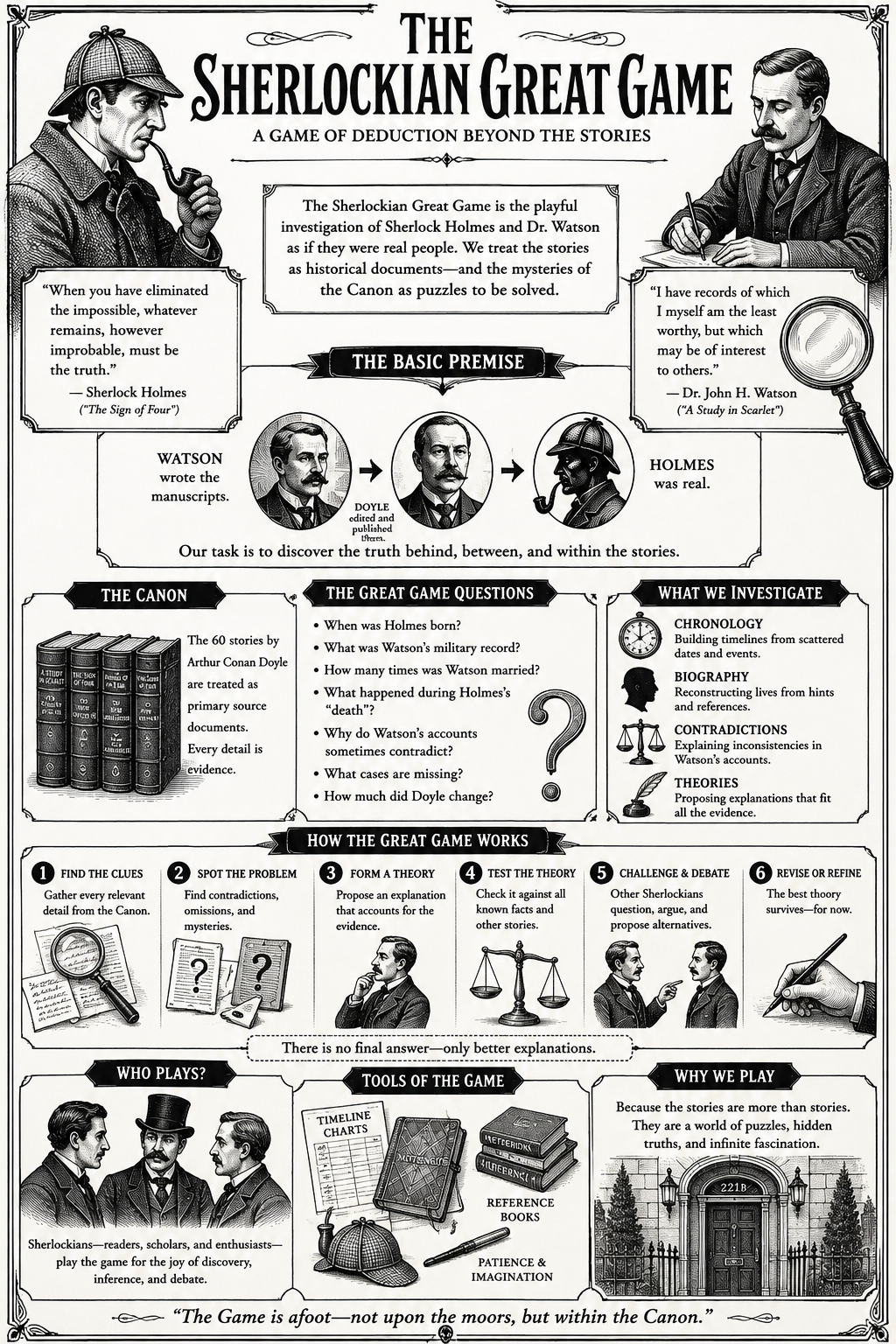
The connection between C. Auguste Dupin and Sherlock Holmes is one of the most important links in the history of detective fiction. Although Poe’s Dupin and Arthur Conan Doyle’s Holmes are different characters, Holmes clearly belongs to the literary tradition established by Poe.
Dupin as Holmes’s predecessor
Edgar Allan Poe created C. Auguste Dupin in the 1840s, decades before Sherlock Holmes first appeared in A Study in Scarlet in 1887. Dupin is therefore one of the principal ancestors of the modern fictional detective.
Both characters share a fundamental idea: a crime can be solved through intelligence and observation rather than through conventional police methods.
The police investigate by following procedures, collecting evidence, and searching systematically. Dupin and Holmes approach the problem differently. They try to understand the logic behind the crime and reconstruct the mind of the person who committed it.
The detective as an intellectual
Dupin and Holmes are both presented as exceptional intellectual figures.
They possess an ability to notice relationships that ordinary people overlook. Their investigations are therefore less about discovering completely unknown facts and more about connecting apparently insignificant facts into a meaningful pattern.
In The Purloined Letter, Dupin realizes that the police have failed because they have adopted the wrong model of concealment. The letter is not hidden in a secret compartment; it is disguised as an ordinary letter.
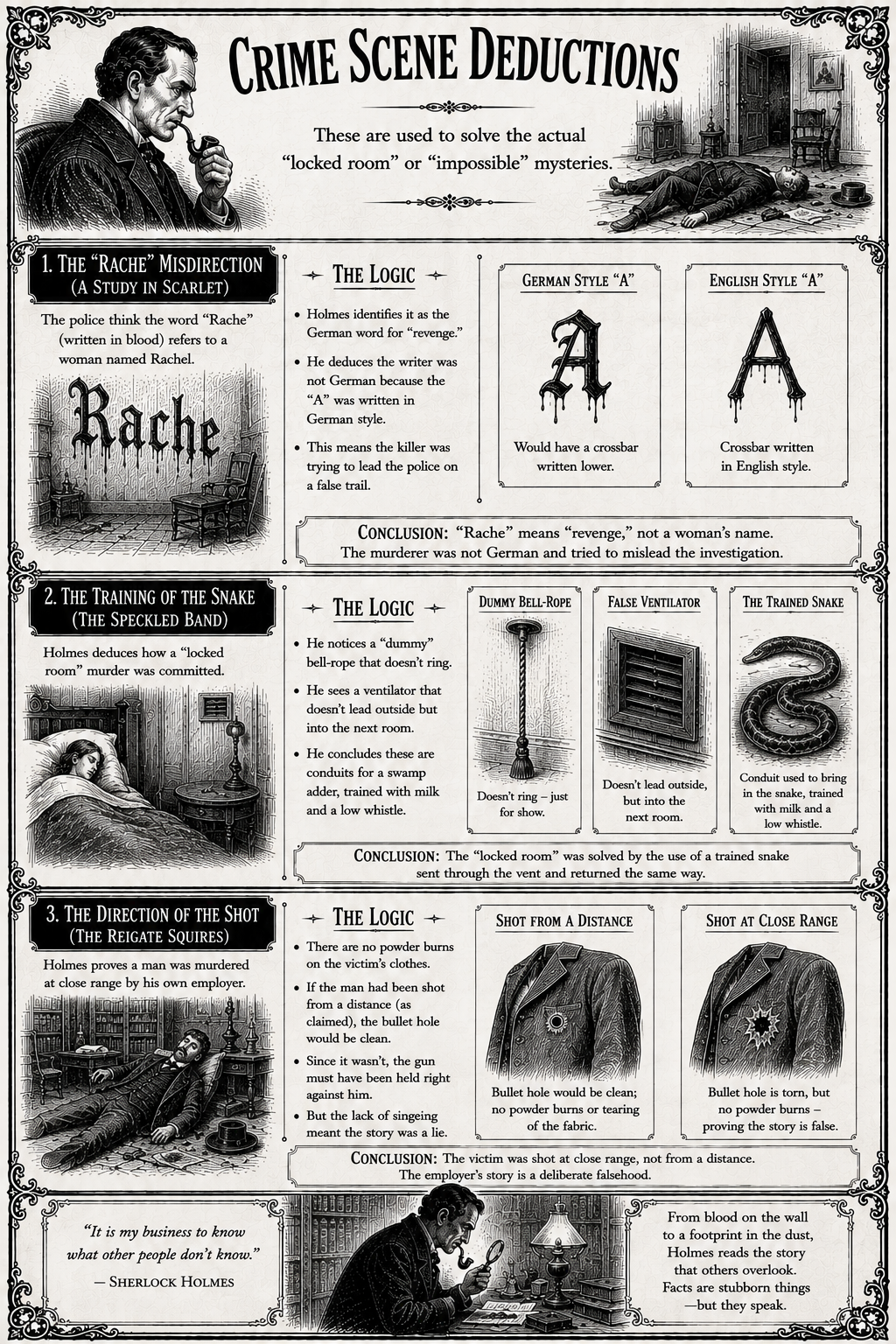
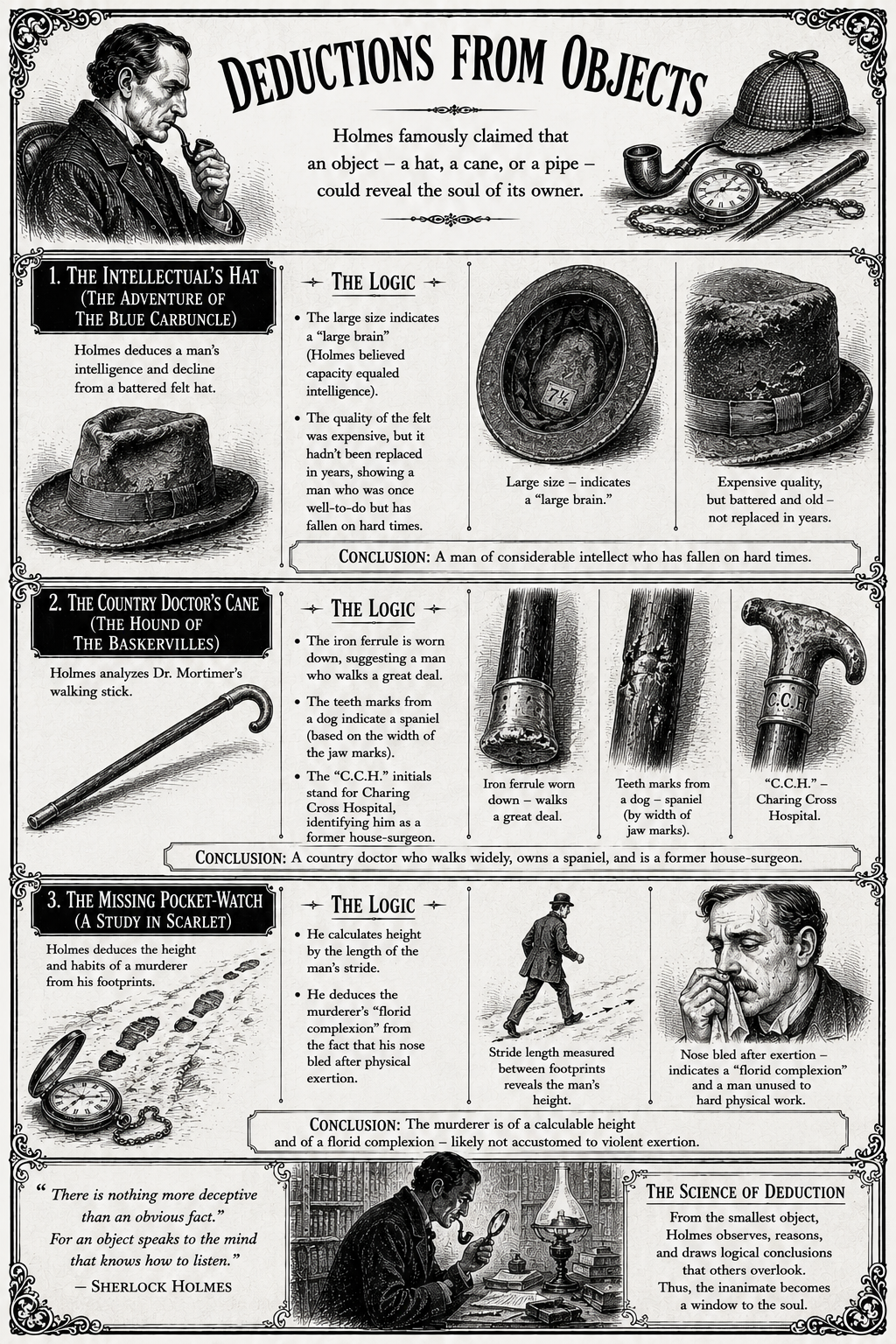
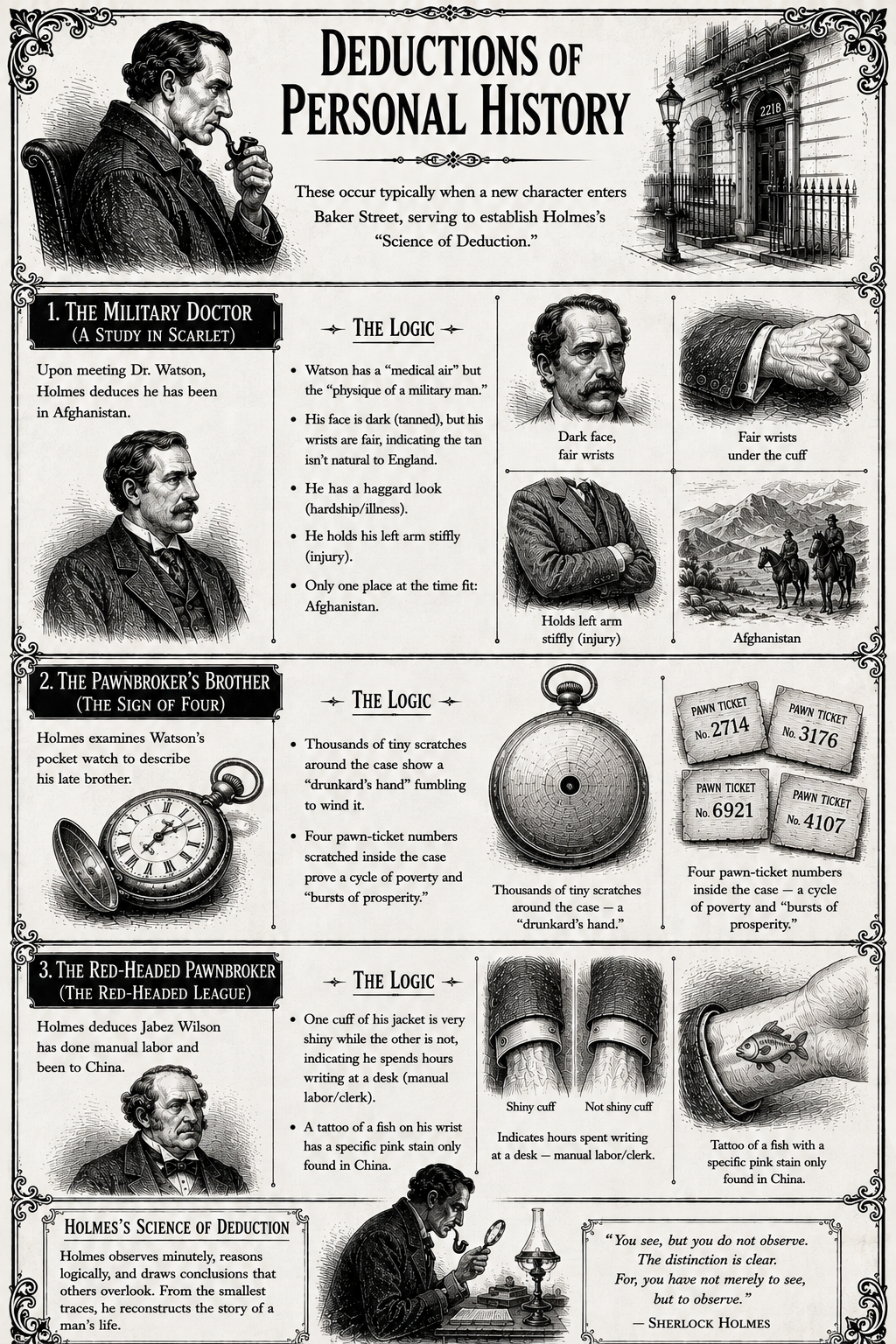
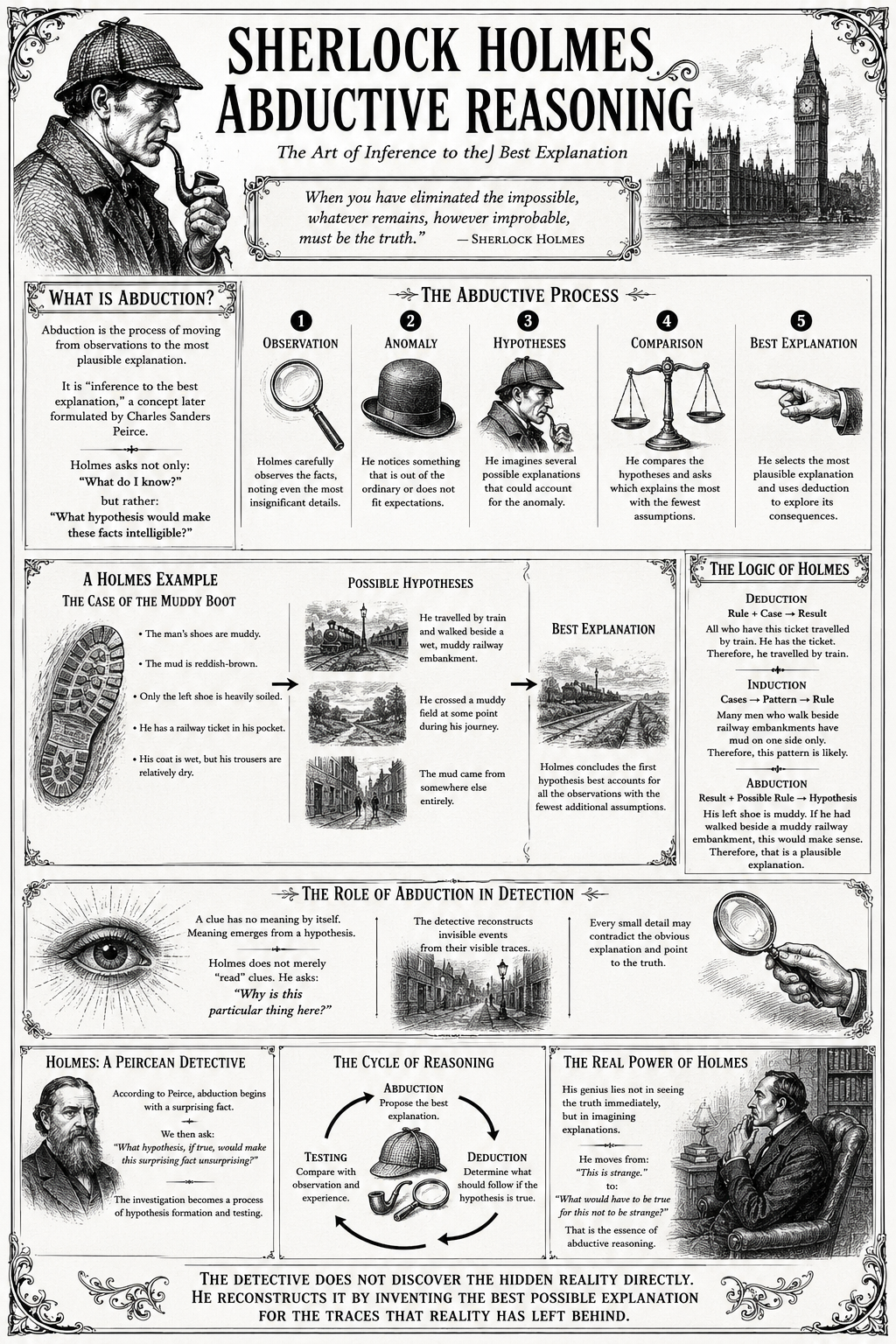
Holmes repeatedly uses a similar principle. He often notices a small detail—a footprint, a cigar ash, a piece of clothing, a mark on an object—and reconstructs an entire situation from it.
The detective’s extraordinary power lies in his ability to transform small observations into large conclusions.
Dupin and Holmes think differently from the police
One of the strongest similarities is the opposition between the detective and the official police investigator.
In Poe’s stories, the Paris police are competent but limited by conventional methods. In The Purloined Letter, the Prefect searches the Minister’s apartment with extraordinary thoroughness but cannot find the letter.
Holmes frequently finds himself in a similar relationship with Scotland Yard. Inspectors such as Lestrade and Gregson are not necessarily stupid; rather, they tend to approach problems through conventional investigative procedures.
Dupin and Holmes occupy another position:
Police → search for evidence
Dupin/Holmes → interpret evidence
That distinction is fundamental to the detective genre.
Thinking like the criminal
Both detectives also understand that solving a crime requires understanding the mind of the opponent.
Dupin explains that the successful investigator must sometimes place himself mentally in the position of the person he is trying to understand.
This becomes a central feature of Holmes’s method as well. Holmes does not merely ask what happened. He asks what kind of person could have produced the evidence and what that person’s intentions were.
In The Purloined Letter, Dupin effectively defeats the Minister by understanding that the Minister is intelligent enough to anticipate the police’s methods.
The detective therefore operates at a higher level of reasoning:
The criminal thinks about the police.
The police think about the criminal.
The detective thinks about both.
Observation and deduction
There is, however, an important difference between the two characters.
Dupin’s method is generally presented in more philosophical and psychological terms. Poe is interested in analytical reasoning, imagination, identification with the opponent, and the ability to perceive an unexpected relationship.
Holmes’s method becomes more explicitly associated with observation and deduction. Doyle gives readers numerous demonstrations of Holmes examining physical evidence and deriving conclusions from it.
This is why Holmes is often remembered as the archetypal scientific detective, while Dupin remains closer to the figure of the philosophical or analytical detective.
The detective as a reader
There is another fascinating connection: both Dupin and Holmes are essentially readers. They read traces in the same way that a reader interprets a text.
A footprint, a letter, a stain, a gesture, or an apparently insignificant object becomes a kind of sign. The detective must determine what that sign means.
This is particularly important in The Purloined Letter. The letter is simultaneously:
– a physical object
– a piece of information
– a secret
– a sign of political power
– an object whose meaning changes according to who possesses it
Dupin therefore solves the case by interpreting not only where the letter is, but what the letter means within the network of relationships between the characters.
Dupin’s influence on Holmes
The relationship between the two characters is not merely a matter of similarity. Doyle explicitly places Holmes within the tradition of Poe’s detective fiction.
Holmes even mentions Dupin in A Study in Scarlet. He admires Poe’s detective but dismisses him as somewhat inferior to himself, famously describing Dupin as having an “inferior fellow.”
This is characteristic of Holmes: he recognizes Dupin as a predecessor while simultaneously asserting his own superiority.
There is also an amusing structural similarity between the two characters’ narratives:
Dupin + unnamed narrator
and
Holmes + Dr. Watson
Both detectives are accompanied by a narrator who is intelligent enough to appreciate the detective’s abilities but not intelligent enough to solve the mystery independently.
The narrator therefore becomes the reader’s surrogate.
We discover the solution at approximately the same moment as the narrator.
From Dupin to Holmes
The development can be summarized as a progression:
Poe → Dupin → Doyle → Holmes
Poe establishes the analytical detective.
Doyle develops the figure into the modern professional detective.
Dupin demonstrates that reason can defeat mystery.
Holmes transforms this principle into an elaborate investigative method based on observation, deduction, forensic evidence, disguise, scientific knowledge, and psychological analysis.
For this reason, The Purloined Letter is not simply an early detective story. It is one of the texts that helped establish the grammar of detective fiction.
At its heart lies the same question that continues to drive Sherlock Holmes’s investigations:
What can an intelligent observer see that everyone else has overlooked?
That is the fundamental inheritance that Dupin passes to Holmes.